
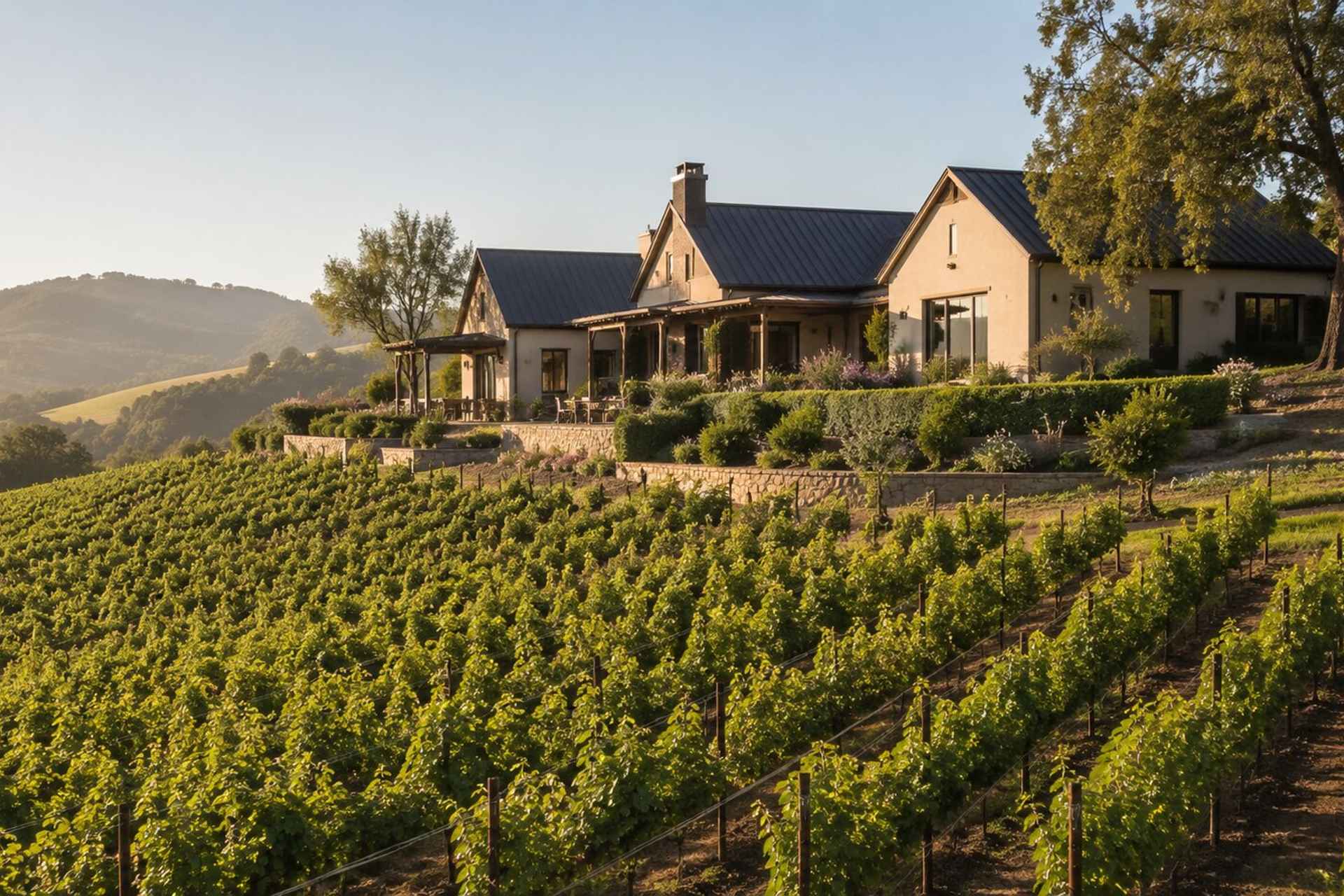
A wine-country property is rarely just a house with attractive rows of vines.
It may be a private residence, a working agricultural property, a lifestyle estate, a source of grape income, a family holding, or some combination of those. It may include wells, irrigation, tanks, pumps, barns, shops, guest structures, equipment, leases, farming relationships, access roads, drainage systems, and years of records that are not stored in one place.
That complexity can become an advantage when it is organized. When it is not, buyers are left to guess what they are evaluating.
The first stage of preparation is therefore not staging or photography. It is deciding what the property can credibly offer and assembling the information that supports that story.
Decide What Story the Property Can Support
Start by asking a basic question: what is the vineyard’s role in the property?
For one buyer, the vines may be the central asset. That buyer may focus on varietals, vine age, block layout, yields, water, farming practices, contracts, disease history, replanting needs, and operating costs.
For another, the vineyard may be part of the setting rather than the primary business. That buyer may care more about privacy, views, architecture, guest accommodations, outdoor living, and whether a qualified operator can continue managing the vines.
A third buyer may be interested in long-term potential but have limited agricultural experience. That person needs a realistic picture of what is currently in place, what requires specialist review, and which responsibilities come with ownership.
The listing should not try to be everything to everyone. It should establish the property’s strongest verified position while giving other plausible buyers enough clarity to determine whether it fits.
Separate Residential Records From Vineyard Records
Create two parallel property files: one for the residential estate and one for the vineyard or agricultural component.
The residential file may include:
- Permits, plans, inspections, and improvement records
- Well, septic, water, electrical, solar, generator, and propane information
- Roofing, heating, cooling, pool, landscape, and major-system records
- Floor plans, surveys, site plans, and prior reports
- Records for guest houses, cottages, barns, shops, or other structures
The vineyard file may include:
- Varietals, rootstocks, clones, vine age, acreage, and block maps
- Available production, yield, harvest, and farming records
- Irrigation layout and water-source information
- Farming practices, certifications, pest or disease records, and replanting history
- Management, lease, grape-sale, equipment, or service agreements
- Drainage, erosion-control, road, fence, and trellis information
- Records for frost protection or other vineyard systems
These files do not need to become a public data room on day one. They give the seller and listing team a way to see what is known, what is missing, what is sensitive, and what qualified buyers may need later.
Organize Water and Irrigation Information Early
Water is one of the first subjects serious vineyard buyers may investigate, yet owners often have the information spread across invoices, well reports, pump records, maps, and conversations with a vineyard manager.
Begin by identifying the documented water sources serving the residence, vineyard, landscaping, fire-protection systems, and other uses. Note which systems are shared, where storage is located, how irrigation is distributed, and which records are available.
Useful material may include well logs, test results, pump and tank records, irrigation maps, maintenance invoices, meter information, water-right or district documents when applicable, and notes from qualified specialists.
Do not turn partial information into a broad claim about water availability, capacity, rights, long-term reliability, or future vineyard expansion. Those conclusions belong with the appropriate agencies and water, engineering, agricultural, legal, or land-use professionals.
The goal at the listing stage is simpler: make the existing system understandable and create a clear path for further verification.
Clarify Farming, Management, Lease, and Grape Agreements
A vineyard may look self-contained while depending on relationships that do not automatically transfer with the sale.
Before marketing, identify who farms the property, who owns the equipment, who makes operational decisions, and which written or informal agreements are in place. Determine whether grapes are sold under contract, whether vineyard management continues for a defined period, and whether any lease, service, access, labor, or equipment arrangement affects the property.
Review transferability, termination, confidentiality, assignment, and disclosure questions with the appropriate legal, tax, and agricultural advisers. Do not promise a buyer that a contract, farming team, label relationship, or revenue stream will continue unless that has been confirmed.
For some buyers, continuity is highly valuable. For others, the ability to choose a new direction matters more. The listing strategy should explain the current arrangement without presenting it as guaranteed.
Review Every Structure and Improvement
Wine-country estates often combine a main residence with guest accommodations, barns, shops, equipment storage, offices, studios, agricultural buildings, pools, outdoor kitchens, water tanks, solar systems, generators, or caretaker spaces.
Create an inventory of each structure and improvement, including current use, access, utilities, condition, available records, and relationship to the vineyard operation. Use the description supported by the documentation rather than relying on a household nickname or a prior listing.
Pay particular attention to buildings that influence a buyer’s plans. A guest cottage, farm shop, temperature-controlled space, equipment barn, or second residence may materially shape the buyer pool, but only if buyers can understand what it is and how it functions.
If records and physical conditions appear inconsistent, flag the issue before the marketing language is finalized and route the question to a qualified professional.
Prioritize Work That Improves Confidence
Vineyard-estate sellers can spend heavily on preparation without improving the decision a buyer has to make.
Begin with safety, weather protection, basic function, access, and obvious deferred maintenance. Clear roads and walkways, service gates, repair damaged steps or rails, address visible leaks, test lighting, remove accumulated storage, and make important systems approachable.
Then look at presentation. Trim vegetation where it blocks views or movement, organize equipment areas, clean tanks and utility zones, define outdoor rooms, and make the transition from residence to vineyard feel intentional.
Do not erase the working character of an agricultural property. Buyers may expect equipment, dust, irrigation components, storage, and seasonal variation. The goal is order, not artificial perfection.
Plan Access for Specialists and Serious Buyers
A conventional showing may not be enough for a vineyard property.
Qualified buyers may want to walk vineyard blocks, inspect water and irrigation components, understand road and equipment access, view barns and utility areas, and speak with specialists during due diligence. Some may bring a vineyard manager, viticulturist, water professional, contractor, insurer, lender, or land-use adviser.
Before launch, decide how these visits will be handled. Identify locked areas, animals, occupied structures, equipment hazards, steep terrain, muddy routes, biosecurity concerns, and times when vineyard work may conflict with showings.
A well-designed access plan protects the property and allows serious buyers to investigate without creating unnecessary disruption.
Time the Visual Story Carefully
Vineyard photography is seasonal, but the strongest marketing does not depend on one dramatic aerial image.
The visual plan should explain the estate at several scales: the setting within Sonoma County, the approach and privacy, the residence, the relationship between the home and vines, the vineyard blocks, supporting structures, water or utility infrastructure where appropriate, and the outdoor experience.
Historic images may help show another season, but they should be labeled accurately and should not replace current-condition photography. A block map, site plan, floor plan, or simple diagram may give a serious buyer more useful information than another sunset photograph.
If the timing allows, plan imagery around meaningful vineyard conditions rather than assuming the property must wait for harvest. The best launch date depends on readiness, market conditions, operational demands, and the story the property can honestly support.
Market Romance and Reality Together
Wine-country real estate naturally invites emotional language. Views, quiet, architecture, vines, and outdoor living matter.
But buyers also need operational clarity. The strongest presentation combines the experience of the property with grounded information about systems, structures, land, records, and current vineyard arrangements.
Avoid unsupported claims about production, profitability, award potential, expansion, winery or hospitality use, vacation-rental eligibility, water, legal status, tax treatment, or future development. Those statements can attract attention, but they also create the wrong expectations and the wrong buyer conversations.
Credibility is a marketing advantage. A buyer who understands both the appeal and the responsibilities can make a stronger decision.
Price for the Likely Buyer
Vineyard and estate pricing cannot be reduced to residence square footage, planted acreage, or a generic “wine-country premium.”
The market may respond to the quality of the home, setting, privacy, vineyard condition, varietals, water and irrigation, supporting improvements, operational continuity, contracts, access, and the availability of records. Different buyers may assign very different importance to the same feature.
Comparable sales require close interpretation. One vineyard property may be purchased primarily as a residence; another may be evaluated as an agricultural operation; a third may be valued for land, privacy, and long-term optionality.
The pricing strategy should identify the most likely buyer path, then test how the property compares within that path. It should also acknowledge where uncertainty may lead buyers to discount value or require additional diligence.
A Practical Pre-Listing Checklist
- Define the vineyard’s role in the property’s market position
- Create separate residential and vineyard record files
- Assemble maps, acreage, varietal, vine-age, and block information
- Organize available farming, harvest, yield, and maintenance records
- Document current water sources, storage, pumps, and irrigation layout
- Identify farming, management, lease, grape-sale, and service agreements
- Inventory every residence, guest space, barn, shop, and agricultural improvement
- Flag permit, use, access, water, or record questions for qualified advisers
- Prioritize safety, function, access, order, and weather protection
- Plan specialist access and a realistic showing process
- Create photography that explains the estate as well as the vineyard
- Remove unsupported income, production, water, or future-use claims
- Build pricing around the likely buyer and the property’s verified strengths
Prepare the Property Buyers Will Actually Evaluate
A vineyard estate becomes easier to market when the seller can explain what is present, how it functions, which records exist, and where further verification belongs.
That preparation does not remove complexity. It turns complexity into a structured buyer conversation.
I help Sonoma County owners position distinctive properties by bringing the residential, agricultural, operational, and lifestyle pieces into one coherent sale strategy. The objective is to preserve what makes the property compelling while giving qualified buyers the clarity they need to proceed.
If you are considering a sale, begin with a private property review through Sell With Me. For broader guidance on this property category, visit Vineyard & Estate Properties. You can also explore Rural & Acreage Properties, Luxury Homes, and the West County Real Estate & Living hub.
Frequently Asked Questions
Do I need several years of vineyard production records before listing?
Not every sale requires the same record set, but available production and farming history can help serious buyers understand the vineyard. Gather what exists, identify gaps, and decide with the appropriate advisers what should be shared and when.
Should I wait for harvest or peak foliage to list?
Not automatically. Visual timing matters, but readiness, market conditions, vineyard operations, access, and the seller’s objectives also matter. Historic seasonal imagery can supplement current photography when labeled accurately.
Can I advertise expected grape income or vineyard profitability?
Use verified historical information only when appropriate and reviewed. Future income, production, pricing, contracts, costs, and profitability should not be promised.
What if a vineyard manager handles most of the operational details?
Ask the manager to help organize maps, records, systems, schedules, and current agreements. Also clarify which services or relationships may continue after a sale rather than assuming they transfer.
Will buyers want specialist inspections?
Many serious buyers will involve professionals whose expertise matches the property’s systems and intended use. A listing strategy should anticipate reasonable access while keeping the process organized.
Does a small vineyard need this level of preparation?
The depth may change, but the principle does not. Even a lifestyle vineyard can raise questions about water, maintenance, farming responsibility, agreements, structures, and future plans.
Check out this article next